/rjhowe@erols.com It may well be that I was one of the few in our
conversation unclear about how the process of carding differs from combing
and my thanks to Marla for her clear description. Here are two images of
carding tools from Peter Stone’s “The Oriental Rug Lexicon.” One of them
is of the paddle devices to which Marla refers. 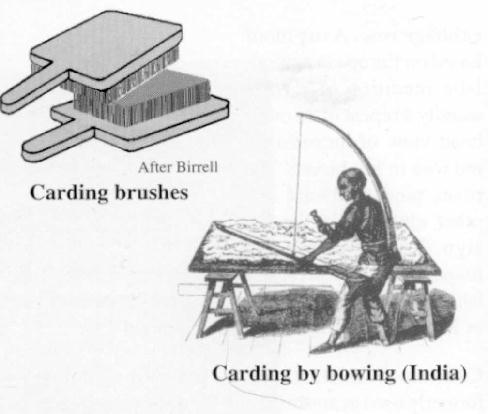 Interestingly, Stone’s
definition of “carding” appears to go astray, momentarily, when he refers
to it as a process that “aligns” the fibers in wool. But it is clear in
some of his associated references, that he in fact understands, correctly,
the distinction between “carded” and “combed” wool. At one point, he says
that the term “woolen” is technically one that describes a thread/fabric
made from “carded” wool (he shows a labeled image of a thread with fibers
pointed in different directions), while thread/fabric made from “combed”
wool is described as “worsted.” Regards, R. John Howe Interestingly, Stone’s
definition of “carding” appears to go astray, momentarily, when he refers
to it as a process that “aligns” the fibers in wool. But it is clear in
some of his associated references, that he in fact understands, correctly,
the distinction between “carded” and “combed” wool. At one point, he says
that the term “woolen” is technically one that describes a thread/fabric
made from “carded” wool (he shows a labeled image of a thread with fibers
pointed in different directions), while thread/fabric made from “combed”
wool is described as “worsted.” Regards, R. John Howe |
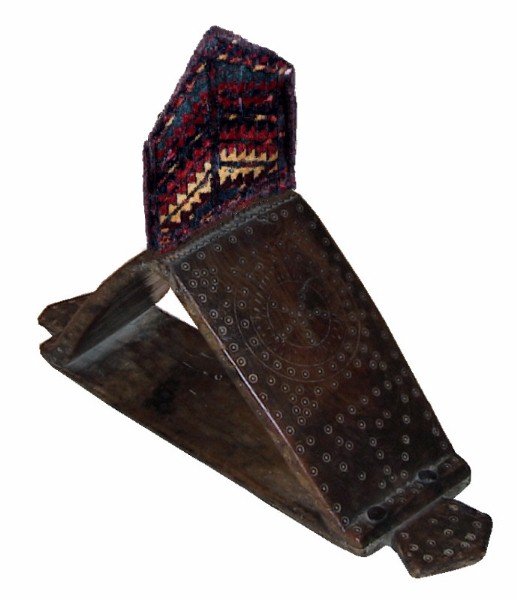
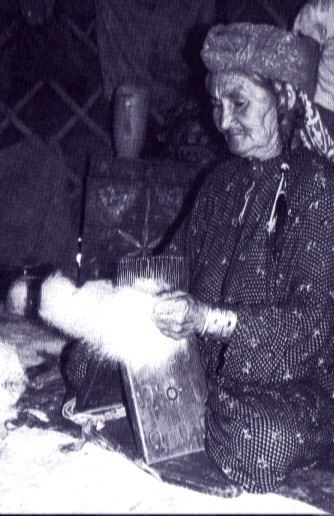 Some years ago I found such a comb
in Bergama, Turkey - an area inhabited by Turkmen settlers in the 12th
century.
Some years ago I found such a comb
in Bergama, Turkey - an area inhabited by Turkmen settlers in the 12th
century. 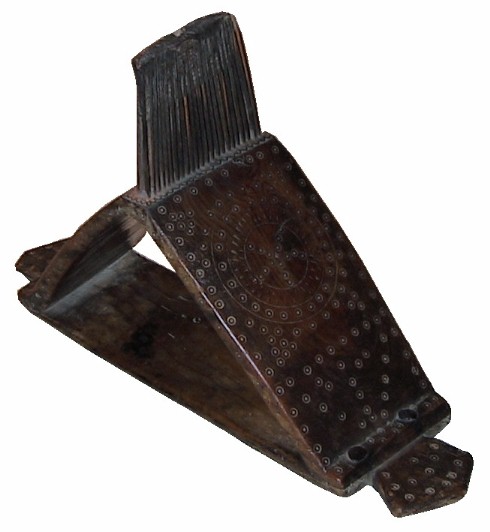 In Turkey there exist 2
(or more) different models of combs. One is like the photo. To me this is
the original Turkmen model. Judging from the photo, my comb is a little
smaller than the one used by the Ali Eli woman, therefore my comb-bag does
not fit properly. The comb bag was used on top of the comb like a cover.
In Turkey there exist 2
(or more) different models of combs. One is like the photo. To me this is
the original Turkmen model. Judging from the photo, my comb is a little
smaller than the one used by the Ali Eli woman, therefore my comb-bag does
not fit properly. The comb bag was used on top of the comb like a cover.
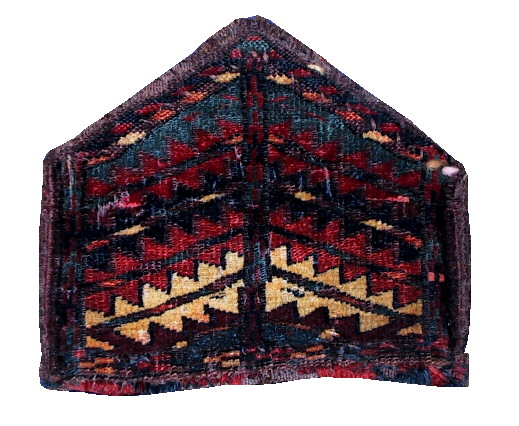
 Generally the comb bag has different
proportions than the camel knee covers. Knee covers are more elongated - 1
by 1½ to 1 by 2 (vertical by horizontal) - than the comb-bags where the
proportions are 1 by 1. Best regards, Soren
Generally the comb bag has different
proportions than the camel knee covers. Knee covers are more elongated - 1
by 1½ to 1 by 2 (vertical by horizontal) - than the comb-bags where the
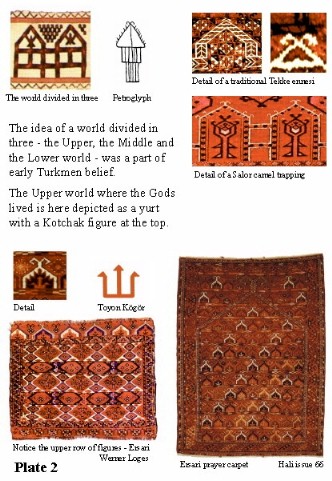
proportions are 1 by 1. Best regards, Soren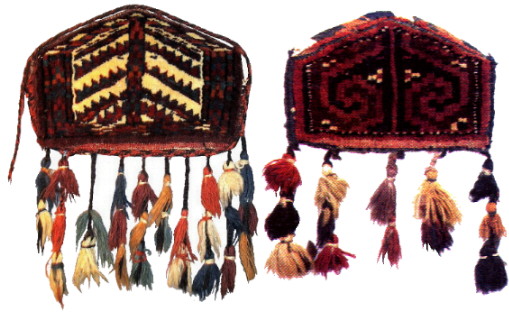 Patrick, I do agree with you, there
is no need for the cover to be pentagonal just as there is no need for the
Asmalyk and the camel knee cover to be pentagonal. The form itself might
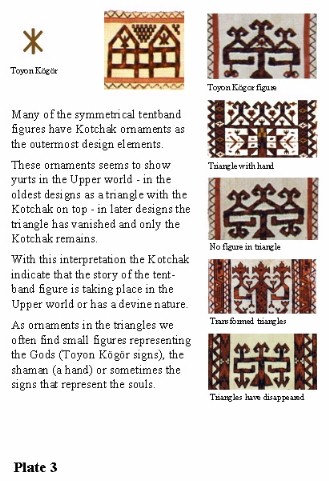
come from the shamanistic idea of the Upper world (or heaven). In early
petroglyphs we can find the Upper world depicted as having a pentagonal
shape. The pentagonal shape is used as design element in many Turkmen
weavings - the idea might be the same. Have a look at Plates 1, 2 and 3
from my 8th ICOC poster presentation
Patrick, I do agree with you, there
is no need for the cover to be pentagonal just as there is no need for the
Asmalyk and the camel knee cover to be pentagonal. The form itself might
come from the shamanistic idea of the Upper world (or heaven). In early
petroglyphs we can find the Upper world depicted as having a pentagonal
shape. The pentagonal shape is used as design element in many Turkmen
weavings - the idea might be the same. Have a look at Plates 1, 2 and 3
from my 8th ICOC poster presentation 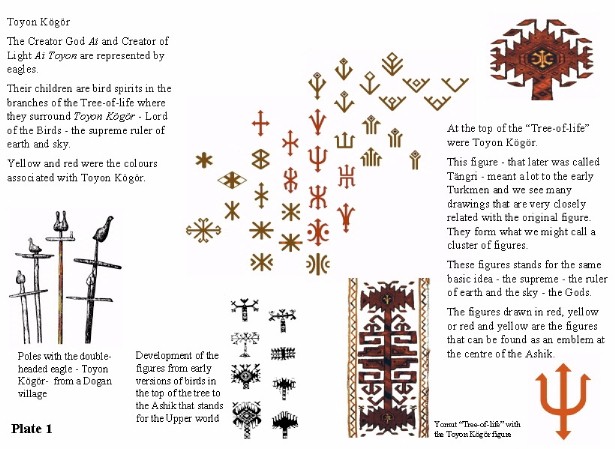
 I do not believe that there has
been another use for the comb bag than as a cover. If it had been used for
other purpose I think that we would find some form of fastening mechanism
- and we do not. Best regards, Soren
I do not believe that there has
been another use for the comb bag than as a cover. If it had been used for
other purpose I think that we would find some form of fastening mechanism
- and we do not. Best regards, Soren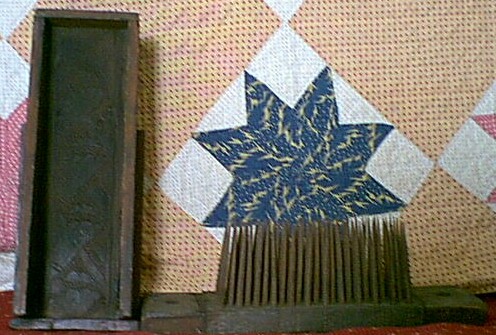
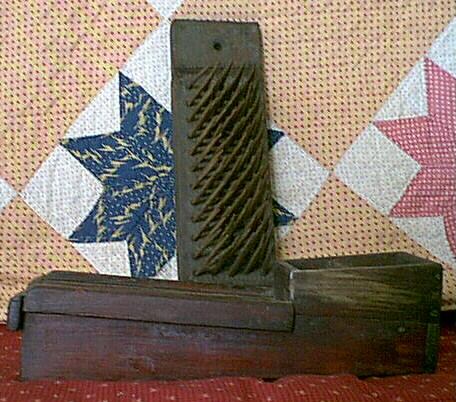 Note that if
protective devices were created for these American combs, they would need
to have a square-ish shape. But they would still need to be used open side
down. I have followed American antique furniture from a distance but have
never heard reference to a cover for these antique American combs. Perhaps
they exist under a name I don't recognize. Thanks again to Soren Neergard
for this very useful post. Regards, R. John Howe
Note that if
protective devices were created for these American combs, they would need
to have a square-ish shape. But they would still need to be used open side
down. I have followed American antique furniture from a distance but have
never heard reference to a cover for these antique American combs. Perhaps
they exist under a name I don't recognize. Thanks again to Soren Neergard
for this very useful post. Regards, R. John Howe